
SCANLAN FAMILY DENTISTRY | DENTAL CARE IN RALEIGH
Understanding Your Options for Restoring Function, Comfort, and Confidence
Losing a tooth can feel overwhelming, but you do not have to choose a replacement without guidance. Bridges, removable dentures, and implant-supported restorations can each rebuild function in a different way. The right choice depends on how many teeth are missing, the health of the remaining teeth and gums, bone support, medical history, comfort, priorities, and budget. A thoughtful evaluation gives you time to understand the choices and decide what fits your life.
Five Quick Questions About Tooth Replacement
Does every missing tooth need to be replaced?
Not always. The location of the space, your bite, nearby teeth, and your goals all matter. We can explain what may happen if the space is replaced or monitored so you can make an informed choice.
What is the difference between a bridge and a denture?
A bridge is fixed to supporting teeth and stays in the mouth. A partial or full denture is removable and can replace several teeth or an entire upper or lower arch.
Is an implant the same as an implant crown?
No. A surgical provider places the implant in the jaw. The crown, bridge, or denture attached to it is the visible restoration that replaces the missing tooth or teeth.
How long does tooth replacement take?
Timing varies. Bridges and dentures usually require several appointments, while implant treatment often includes additional healing time. We explain the expected sequence before treatment begins.
Can dental insurance help with the cost?
Some plans provide partial benefits. Waiting periods, deductibles, annual maximums, and replacement rules vary, so our team can help review an estimate without promising what the plan will pay.
Continue reading for a fuller comparison of the choices and the questions worth considering before treatment.
Why Replacing a Missing Tooth May Matter
A missing tooth can affect more than appearance. Depending on its location, the space may change how comfortably you chew, how certain words sound, and how you feel when smiling or speaking with other people.
Teeth also work together. A neighboring tooth may gradually tilt toward an open space, while the tooth in the opposite arch may move farther because it no longer meets a partner during biting. The amount and speed of movement differ from person to person, but those changes can affect the bite and make future treatment more complicated.
The American Dental Association’s guidance on missing teeth identifies bridges, dentures, and implants as common replacement choices. There is no single best answer for every patient. The useful question is which option fits your health, priorities, and ability to care for the restoration over time.
Dental Bridges Offer a Fixed Replacement
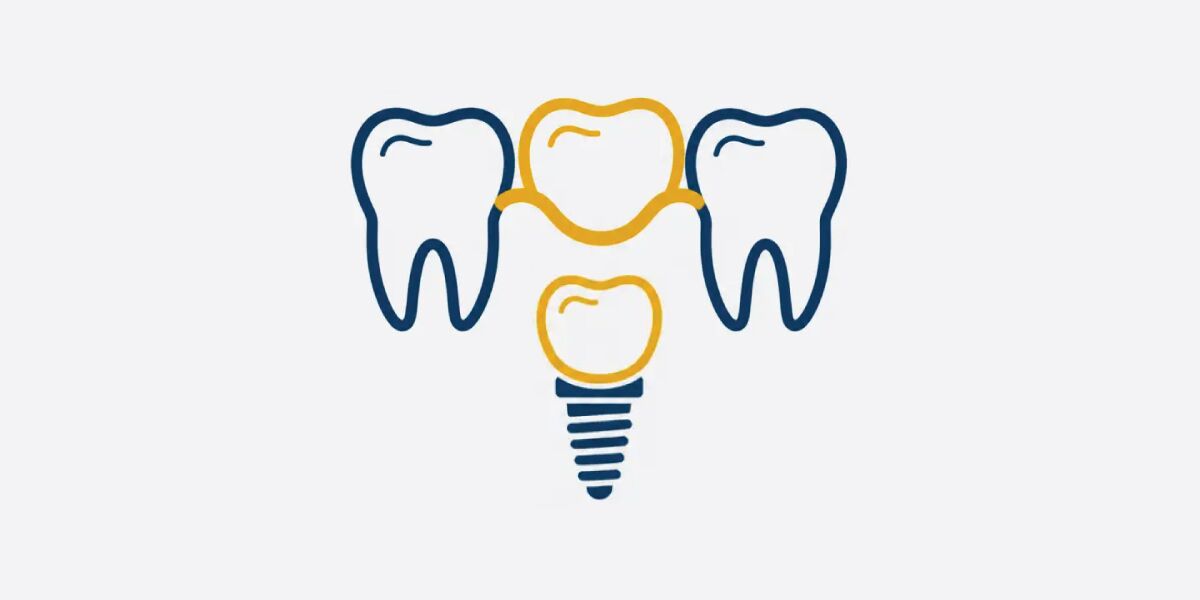
A conventional dental bridge uses crowns on teeth beside the space to support an artificial tooth between them. Once cemented, it stays in the mouth and is cleaned in place. For many patients, having a fixed tooth that does not come out at home feels familiar and convenient.
The supporting teeth must be healthy and strong enough to carry the bridge. Because they are reshaped for crowns, their existing condition matters. A bridge can be especially practical when those teeth already need substantial restorations. It may be less attractive when neighboring teeth are healthy and untouched.
Cleaning underneath the artificial tooth takes a little practice and usually requires a floss threader, interdental brush, or another tool recommended by the dental team. Our dental bridges page explains the planning and maintenance considerations in more detail.
Partial and Full Dentures Provide Removable Choices
A removable partial denture can replace several missing teeth while using the remaining teeth for support and stability. A full denture replaces all teeth in an upper or lower arch. Both are removed for cleaning and are usually taken out during sleep unless the dentist provides different instructions.
Dentures can replace many teeth without preparing every neighboring tooth for a crown. They can also support the lips and cheeks when extensive tooth loss has changed facial contours. Because a removable appliance feels different from natural teeth, patients need time and patience while speaking and eating begin to feel more comfortable.
The fit can change as gums and underlying bone change over time. Sore areas, movement, or difficulty chewing deserve an evaluation rather than increasing the amount of adhesive. Our dentures page covers partial dentures, full dentures, and follow-up care.
Implant Restorations Replace a Tooth From the Foundation Up
A dental implant is placed in the jaw and can support a crown, bridge, or denture. A single implant restoration does not rely on crowns placed over neighboring teeth. Implant support can also improve the stability of some larger restorations.
Implant treatment usually involves more steps and healing time. Bone volume, gum health, smoking, medical conditions, medications, and the location of nearby nerves or sinuses can affect candidacy. Not every patient or every missing-tooth site is appropriate for an implant, and additional procedures may be recommended before placement.
Our office restores implants but does not surgically place them. When an implant is appropriate, a surgical specialist places it and monitors healing. We then plan and provide the visible restoration that attaches to it. Our implant restoration page explains how that coordinated process works.
Choosing an Option Is a Conversation, Not a Sales Decision
An evaluation begins with the space, but the recommendation includes much more. The dentist considers the teeth beside and opposite it, gum health, bite, bone support, hygiene, medical history, and signs of infection or active disease. Current X-rays may be needed to see roots and bone that are not visible during an examination.
We also want to understand what matters to you. Some patients strongly prefer a fixed restoration. Others place more weight on treatment time, cost, ease of cleaning, or avoiding surgery. Those priorities belong in the discussion because a restoration must work in everyday life, not only look appropriate on an X-ray.
Each tooth-replacement option has ongoing care needs. Bridges require monitoring of the supporting teeth and crown margins; dentures may need fit adjustments as tissues change; and implant restorations need checks of the tissues and restorative components. Wear, damage, decay, or other clinical changes can sometimes require additional care. Understanding these needs helps patients compare options and plan follow-up.
Scanlan Family Dentistry, formerly known as Galligan Family Dentistry, evaluates tooth-replacement needs for patients in North Raleigh. We explain the choices one at a time and coordinate with a surgical specialist when implant placement is part of the plan.
Caring for Your Replacement
Daily care depends on the restoration. A bridge needs cleaning along the gumline and underneath the replacement tooth. A denture should be removed and cleaned with products made for removable appliances. An implant restoration needs careful plaque removal around the restoration and implant connection.
Call a dentist if a restoration becomes loose, breaks, causes a sore area that does not improve, traps food in a new way, or changes the bite. Early attention may allow a straightforward adjustment and can protect the supporting teeth and tissues.
The best replacement is one that addresses the clinical problem, respects your priorities, and can be maintained comfortably. Our role is to give you accurate information and thoughtful guidance so the final decision feels informed rather than rushed.
Talk With Us About Your Options
If you are living with a missing tooth or facing an extraction, call Scanlan Family Dentistry to schedule an evaluation. We will listen to your concerns and explain which replacement choices may suit your health, comfort, and priorities.
Explore our restorative dentistry services for an overview of tooth-replacement care.
Call or Text (919) 977-1870